
We Build The Wrong Thing First On Purpose
Nobody can tell you what they want. Everybody can tell you what’s wrong with the thing you just handed them. So we hand them something early, rough, and probably wrong. On purpose. Here’s why the cheapest mistake is the one you make in a week.
A few years back we sat in a conference room with a client for the better part of two hours. They told us what they wanted. We took notes. We asked good questions. Everybody nodded. We went away and built it, and three months later we put it in front of them and watched their faces do the thing faces do when the words coming out of the mouth are “this looks great” and the eyes are saying “this is not what I meant.”
Nobody lied in that room. They described what they wanted as well as anyone can. The problem is that nobody can describe what they want. Not really. People are terrible at telling you what they need and absolutely brilliant at telling you what’s wrong with the thing you just handed them.
So now we hand them something early. Something rough. Something that’s probably wrong. On purpose.
What we mean by a prototype
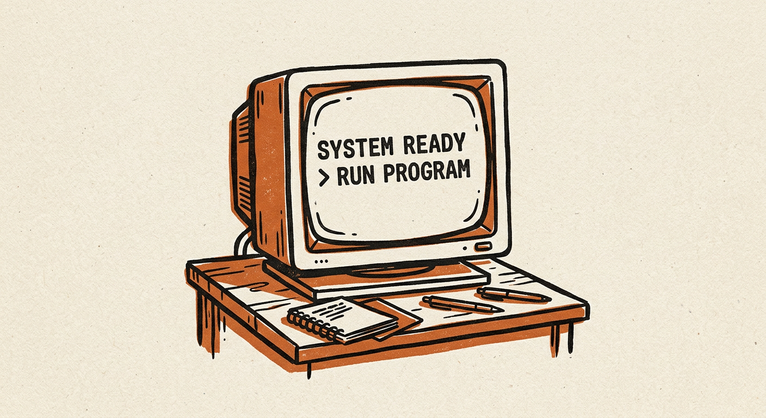
Not a wireframe. Not a mood board. Not a slide deck with boxes on it. Something you can click.
For us that usually means a staging site with the real navigation, the real page types, two or three pages of real content, and almost no polish. Default styling. Placeholder photos. Buttons that go where they’re supposed to go. If it takes more than a few days to put together, it’s not a prototype anymore, it’s a first draft of the project, and that’s a different thing with a different cost.
The point isn’t to show off. The point is to give people something to react to.
It fixes “I’ll know it when I see it”
Every project has at least one person who can’t tell you what they want but will know it the second they see it. That’s not a character flaw. That’s how most of us work. A spec is an abstraction. A sitemap is an abstraction. A prototype is the thing.
This matters double when there’s a board, a council, or a committee involved. Those groups cannot review a Google Doc. They won’t, and honestly they shouldn’t have to. But they can click through a site on a laptop in a meeting and tell you in five minutes that the events page is more important than the history page, and that nobody is going to find the permits.
Discovery tells you what the problem is. A prototype tests whether your answer to it is right.
It surfaces the real scope while it’s still cheap
The “oh, we also need…” moment is coming no matter what. The only question is whether it shows up in week one or week ten.
A prototype pulls it forward. The client clicks into a section and realizes they have nothing to put there. Or they realize the thing they described as “a simple form” is actually a workflow with four approval steps and a payment. Or they see the menu laid out and finally notice that three of their departments don’t fit anywhere.
All of that is fine to discover on a thing that took three days. It is painful to discover on a thing that took three months. We’ve written before about rebuilding a small shop from scratch and how the real project was hiding under the one we were asked to do. A prototype is how you find the real project faster.
It turns review into collaboration
Show someone a finished, polished design and you’ve put them in judge mode. They’re deciding whether to approve it. They’re also quietly worried about hurting your feelings, which means they soften their feedback, which means you don’t get the truth.
Show someone something rough and they relax. Rough edges are permission. Nobody feels bad telling you the placeholder is wrong. They lean in, start pointing at the screen, and before long you’re building the thing together instead of defending it.
The big decisions get made on something cheap. That’s why the revision rounds later are shorter and calmer.
It protects the team
This one doesn’t get talked about enough. Building the wrong thing for three months is bad for the client, sure, but it’s also miserable for the people doing the building. Nobody wants to tear out work they were proud of.
A prototype means you’ve already touched the hard parts before you quote the timeline. You’ve found the plugin that doesn’t play nice. You’ve found the integration that doesn’t do what the sales page promised. Your estimates get better because they’re based on something you’ve actually built, not something you’ve imagined.
Where it goes wrong
We’d be lying if we said this was all upside.
The prototype that becomes the product. “It already works” is a dangerous sentence. Rough code has a way of sneaking into production if nobody draws the line.
Clients mistaking rough for done, or rough for sloppy. You have to set this up before you show it. We say some version of “this is going to look unfinished because it is, and that’s the point” every single time.
Prototyping as a way to avoid committing. At some point you have to stop iterating and build the thing.
And not every project needs one. If you’ve built the same kind of site a dozen times and the client knows exactly what they want, skip it. Prototyping something you already know the answer to is just a slower way to start.
How we do it
It sits after discovery and before design. Discovery gives us the shape of the problem. The prototype is our first guess at the answer, built fast enough that being wrong doesn’t hurt.
What’s in it: real structure, real navigation, a handful of real pages, the one or two flows that matter most. What’s left out: color, type, photography, anything that would make someone evaluate it as a design instead of a plan.
We present it with a short list of questions. Does this structure make sense? What’s missing? What would you move? We don’t ask whether they like it, because liking it isn’t the point yet.
Afterward it either gets thrown away, kept as a reference while we design, or in rare cases evolved into the build. The default is throw it away. It did its job.
The point
The fastest way to find out what someone wants is to hand them something and watch what they do with it. So we build the wrong thing first. It’s the cheapest way we know to end up with the right one.
See you on the trail.
Thanks for sticking with it.
— The Period Three Crew

Working on something?
We'd Love To Hear About It.
If this resonated and you're thinking about a project of your own, we'd be glad to talk. No pressure, no pitch deck, just a real conversation about whether we might be a good fit.