
Notes From the Denali Trip That Made Us Rethink Our Process
The mountain is only visible about thirty percent of the time. We got lucky and saw the summit for about eight minutes at four in the morning on day two, before the clouds rolled back in. We did not see it again for the rest of the trip. I’ve been thinking about that trip for months.
Denali National Park and Preserve covers six million acres of Alaska. The mountain itself, which they used to call McKinley, is the tallest in North America. Twenty thousand three hundred and ten feet. You can see it from a hundred miles away on a clear day.
The thing about Denali is that most of the time, it isn’t a clear day.
The rangers at the visitor center will tell you the mountain is only fully visible about thirty percent of the time. The other seventy percent, it’s hiding behind weather. Clouds, snow, mist. You can be standing in a parking lot named after the mountain, with signs pointing at the mountain, and have no idea whether the mountain is actually there.
We went up to see it. We stayed four days. We got lucky and saw the summit for about 30 minutes at nine in the morning on day two, before the clouds rolled back in. We did not see it again for the rest of the trip.
I’ve been thinking about that trip for months.
The planning problem
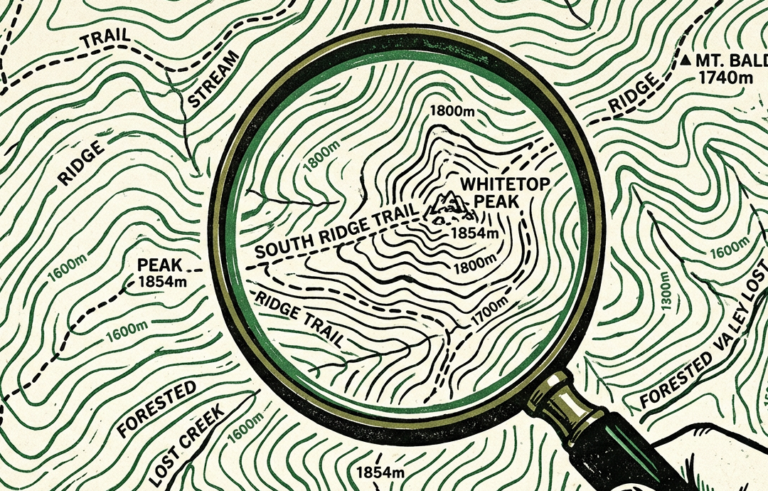
When we plan a project, we tend to plan it like we can see the whole thing. The timeline is drawn in confident lines. The milestones are specific dates. The deliverables are listed in order. We hand it to the client and it looks like a map.
But most projects, like Denali, are not fully visible when you start them. There are big shapes you know are there. Timeline, scope, the general outline of what you’re building. Those are real. You can plan around them. But the specifics, the actual summit, the thing you’re trying to get to, is often hidden until you get up close.
The old version of us would plan the whole trail. Every switchback. Every stop. Every elevation gain. And then when we got on the trail and the weather turned, we’d stand there with a plan that didn’t match the terrain, trying to force the terrain to match the plan.
The new version of us plans the trailhead. We plan the first big move. We plan what we’ll do when we can see further, and we commit to adjusting when we can.
What that looks like in practice
Here’s a concrete example. On a typical project, we used to lock in the full sitemap during discovery. All the pages. All the sections. All the content types. We’d ship it to the client in week three, get sign-off, and then build to it.
Then invariably, somewhere in week eight, the client would say “actually, we need to add a section for…” and we’d be stuck. The design didn’t account for it. The build was already partway through. The content was already being written. Changing it meant backing up and redoing work.
Now we lock in the top-level architecture early and leave the interior deliberately flexible. We know there will be a services section. We know there will be case studies. We know there will be some kind of resource library. What’s in each of those gets decided closer to the time we actually need to build it, when we know more about what the client has and what their audience is doing.
Committing to specifics we can’t see yet is a form of lying, and the lie always catches up with us around week eight.
This is scarier for everybody at first. The client wants to see the whole plan. We want to show them the whole plan. But committing to specifics we can’t see yet is a form of lying, and the lie always catches up with us around week eight.
The weather you can’t see
The other Denali lesson is about weather you can’t see.
When you look at the mountain from a distance, on a rare clear day, it looks like a destination. Something you point at and walk toward. But the climbers who actually attempt the summit know that most of the mountain’s danger isn’t visible from the ground. It’s the storms that build on the upper slopes. The wind that funnels through specific passes. The crevasses hidden under snow bridges that look solid from above.
Projects have invisible weather too. The internal politics you don’t know about yet. The stakeholder who hasn’t been looped in but has veto power. The CMS platform decision that was made two years ago by someone who no longer works there. The budget cycle that’s about to turn over. The brand refresh that another agency is going to deliver three weeks after our launch.
You cannot plan for weather you can’t see. You can only build a process that assumes the weather will show up. That means check-ins. That means early draft reviews with stakeholders you haven’t talked to yet. That means asking “is there anyone else who should see this before we go further” at every milestone, even when you’re sure you know the answer. Especially then.
What we brought back
The trip itself was great. The food truck in the park sold us caribou chili. We saw a grizzly from a very safe distance. The sunlight at that latitude in July is bizarre and beautiful and makes you feel slightly unmoored from time. We’d go back.
The plan isn’t the terrain. The map isn’t the mountain.
But what we brought back wasn’t just photos. It was a reminder that the plan isn’t the terrain. The map isn’t the mountain. The thing you’re trying to get to might be visible for eight minutes at four in the morning, and the rest of the time, you’re walking on faith and good process.
That’s the job. On Denali, and in the work.
Appreciate you making it to the end.
— The Period Three Crew

Working on something?
We'd Love To Hear About It.
If this resonated and you're thinking about a project of your own, we'd be glad to talk. No pressure, no pitch deck, just a real conversation about whether we might be a good fit.